
Dreaming of walking through the historic corridors of Oxford or the modern tech hubs of London? For Indian students finishing their Class 12 exams in 2026, the United Kingdom remains a top-tier destination. At Jaivik Overseas Consultants, we understand that moving abroad is more than just a flight; it’s a life-altering decision.
If you are searching for study abroad consultants in Ghaziabad or simply looking for study abroad consultants near me to navigate the complex application process, this guide is designed for you. Let’s break down everything you need to know about starting your journey to the UK right after school.
Why Choose the UK After Class 12?
The UK education system is world-renowned for its shorter, more intensive course durations. Unlike the US or India, where a bachelor’s degree usually takes four years, most UK degrees are completed in just three. This means you enter the workforce a year earlier, saving on a full year of tuition and living expenses.
Key Benefits:
-
Global Recognition: Degrees from UK universities are respected by employers worldwide.
-
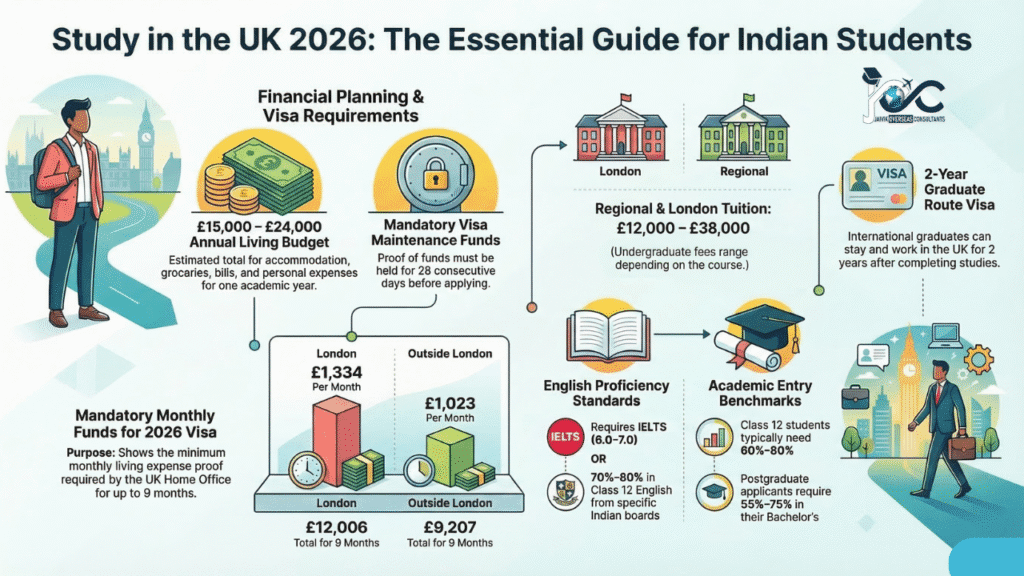
Post-Study Work (PSW): Currently, the Graduate Route allows you to stay and work in the UK for two years after graduation.
-
Cultural Diversity: Join a global community and build a network that spans continents.
Top Course Options for 2026
Choosing to study in UK for indian students often starts with picking the right field. For 2026, several sectors are showing massive growth and high employability.
1. Business and Management
From Finance to International Business, the UK is a global financial hub. Programs often include “sandwich years” (industry placements), giving you hands-on experience before you even graduate.
2. Engineering and Technology
With the rise of AI and Green Energy, UK universities are pouring resources into Robotics, Civil Engineering, and Computer Science. These fields are high on the “shortage occupation” lists, making future visa transitions smoother.
3. Healthcare and Medicine
The UK’s NHS is one of the world’s largest employers. Indian students pursuing Nursing, Pharmacy, or Biomedical Sciences find ample opportunities for clinical practice and research.
4. Law and International Relations
The UK is the birthplace of Common Law, which forms the basis of the Indian legal system. This makes it an ideal place for Indian students to study LLB.
Navigating the 2026 UK Visa Rules for Students
One of the biggest concerns for families is the paperwork. Staying updated on UK visa rules for students is vital because regulations can shift.
-
Confirmation of Acceptance for Studies (CAS): You cannot apply for a visa without this document from your university.
-
Financial Capability: You must prove you have enough funds to cover your tuition for the first year and your monthly living expenses.
-
The Graduate Route: As of now, the two-year post-study work visa remains a major draw, allowing students to gain international work experience.
-
English Proficiency: Most universities require IELTS or PTE scores, though some may waive this if you scored highly in your Class 12 English exam (usually 70% or above).
The Role of Study Abroad Consultants
Why do you need study abroad consultants? The process involves UCAS applications, Personal Statements (SOPs), Letter of Recommendations (LORs), and intricate visa filings.
At Jaivik Overseas Consultants, we act as your bridge to these global institutions. We don’t just fill out forms; we help you find the university that matches your budget, your academic profile, and your career goals.
How We Help:
-
Profile Assessment: Evaluating your 12th-grade marks to find the best-fit universities.
-
SOP Editing: Helping you tell your unique story to the admissions committee.
-
Interview Prep: Mock sessions for university and visa interviews.
-
Pre-Departure Briefing: Ensuring you know what to pack and what to expect when you land.
Timeline for 2026 Intake
If you want to study abroad after 12th, timing is everything.
-
August – October 2025: Research courses and start your IELTS/PTE preparation.
-
November 2025 – January 2026: Submit applications via UCAS.
-
February – April 2026: Receive offers and apply for scholarships.
-
May – June 2026: Finalize your Class 12 results and get your CAS.
-
July – August 2026: Apply for your Student Visa.
-
September 2026: Fly to the UK!
Conclusion
The path to a global career starts with a single step. For students in Delhi-NCR, finding reliable study abroad consultants in Ghaziabad can make the difference between a rejected application and a successful career in London, Manchester, or Edinburgh.
Don’t let the paperwork overwhelm your ambition. Study in UK for Indian students is more accessible than ever in 2026 if you have the right guidance.
Frequently Asked Questions (FAQs)
Planning your journey for the 2026 intake involves staying ahead of the latest regulatory updates. Here are the 5 most critical questions Indian students are asking right now.
Q1. What are the updated financial requirements for a UK Student Visa in 2026?
Ans. The UK government has revised the “Maintenance Funds” (living expenses) that you must show in your bank account. For 2026, the requirements are:
-
Inside London: £1,334 per month (up to 9 months).
-
Outside London: £1,023 per month (up to 9 months). You must also show the remaining balance of your first-year tuition fees. These total funds must be held in your or your parent’s account for at least 28 consecutive days before you submit your application.
Q2. Is a “Foundation Year” necessary for Indian students after the 12th?
Ans. Not always. If you have completed your 12th from a recognized board like CBSE or ISC with high marks (typically 75%–85% or above), you can often apply for direct entry into a 3-year Bachelor’s degree. However, a Foundation Year is a great option if:
-
Your percentage is slightly lower (60%–70%).
-
You are switching streams (e.g., from Commerce to a Science-based Engineering course).
-
You want an extra year to adjust to the UK academic style before starting your degree.
Q3. Can I still bring my family (dependants) to the UK in 2026?
Ans. Under the current rules for 2026, most international students on undergraduate (Bachelor’s) or taught Master’s courses are not permitted to bring dependants. This privilege is now largely reserved for students enrolled in postgraduate research programs (like a PhD or a Research-based Master’s). It is vital to plan your relocation accordingly if you are moving right after your 12th.
Q4. What are the 2026 rules for the Graduate Route (Post-Study Work Visa)?
Ans. The Graduate Route remains a major highlight for Indian students. Upon successful completion of your degree in the UK, you can apply to stay and work for:
-
2 years for Undergraduate and Master’s graduates.
-
3 years for PhD graduates. You do not need a job offer to apply for this visa, and it allows you to work in almost any role, helping you gain the international experience needed to eventually transition to a Skilled Worker Visa.
Q5. How much can I earn from part-time work while studying?
Ans. Most students on a degree-level visa can work up to 20 hours per week during term time and full-time during university holidays.
-
Average Pay: Usually between £10 and £15 per hour.
-
Potential Earnings: Working 20 hours a week at £11.44 (National Minimum Wage) could earn you approximately £915 per month, which can significantly help cover your groceries and local travel.